
When patients visit my office at Dental Care of Brentwood, one of the most common concerns they share with me is persistent bad breath. Many people assume bad breath comes from the stomach or the food they eat, but in reality, gum issues cause a surprisingly large percentage of chronic bad breath cases. In this blog, I want to walk you through why gum problems cause bad breath, how I diagnose the source, and, most importantly, how you can eliminate bad breath caused by gum disease for good.
Why Gum Issues Cause Bad Breath
Bad breath caused by gum disease is commonly referred to as halitosis. When plaque builds up along the gumline, harmful bacteria begin to multiply. These bacteria feed on trapped debris and release sulfur-based chemicals. These sulfur compounds are what create the foul, “rotten egg” smell people often describe.

Scientific Fact
More than 500 different bacterial species can inhabit the mouth, and many of them release volatile sulfur compounds (VSCs), which are the primary cause of gum-related bad breath.
Two major gum conditions that commonly cause halitosis include:
- Gingivitis – the earliest stage of gum inflammation
- Periodontitis – a deeper, more advanced gum infection that affects the bone
According to the Journal of Periodontology:
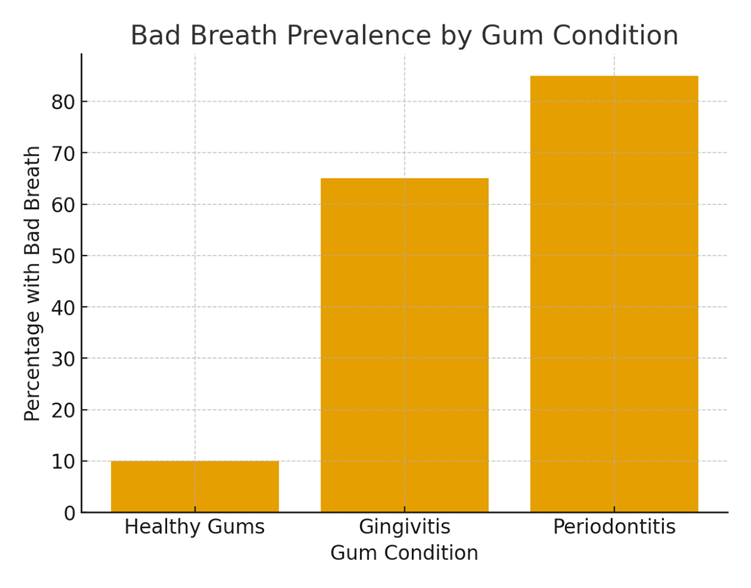
- Up to 65% of individuals with gingivitis experience chronic bad breath
- Up to 85% of individuals with periodontitis suffer from persistent odor
These numbers show how strongly gum conditions and bad breath are linked.
Common Symptoms of Gum-Related Bad Breath
Patients often describe one or more of the following symptoms:
- A bad taste in the mouth
- Bleeding gums
- Red, swollen, or irritated gums
- Dry mouth
- Bad breath that returns shortly after brushing
If these symptoms sound familiar, your bad breath is likely coming from gum issues.
How I Diagnose Gum-Related Bad Breath
At my office, I follow a clear diagnostic process to determine whether your breath concerns are caused by gum disease.
1. Gum Examination
I check for gum inflammation, bleeding, and pocket depth.
2. Plaque and Tartar Analysis
I evaluate buildup levels to see how bacteria are accumulating.
3. Bacteria Testing
Some cases require testing for sulfur-producing bacteria.
4. Dental X-Rays
If I suspect deeper infection or bone loss, X-rays help me confirm it.
A 2023 clinical survey found that over 50% of chronic halitosis cases were linked to periodontal pockets deeper than 4mm. This means that the worse the gum disease, the more likely bad breath becomes.
How To Get Rid of Bad Breath Caused by Gum Problems
The good news is that gum-related bad breath is treatable and often fully reversible. Here’s how I help patients eliminate it:
1. Professional Deep Cleaning (Scaling and Root Planing)
This is the most effective treatment for gum-related odor. I remove hardened plaque and bacteria from beneath the gums, eliminating the source of the smell. Most patients notice a significant improvement within days.
2. Brush and Floss Correctly Every Day
Most people brush daily, but not effectively. Here’s what I teach my patients:
- Brush for a full 2 minutes
- Angle the toothbrush at 45 degrees toward the gumline
- Use short, gentle strokes
- Floss daily to remove bacteria between the teeth
This method prevents bacterial buildup that leads to odor.
3. Use Antibacterial Mouth Rinses
Therapeutic rinses—especially prescription ones—kill the sulfur-producing bacteria linked to gum disease. Chlorhexidine and certain essential oils have strong clinical support for reducing bacterial levels.
For additional reading, visit these high-authority websites:
4. Treat Dry Mouth
Saliva naturally washes away bacteria. When your mouth is dry, odor-causing bacteria grow more rapidly. I help patients address dry mouth through hydration, sugar-free lozenges, and lifestyle adjustments.
5. Quit Tobacco Use
Tobacco dries the mouth, irritates the gums, and increases the growth of odor-causing bacteria. Quitting significantly reduces bad breath and improves healing.
6. Maintain Regular Dental Checkups
Even with perfect home care, gum disease can develop silently. Professional monitoring helps prevent gum infections from returning and stops bad breath before it starts.
When You Should Visit My Office
If you’ve had bad breath for more than one week—even after brushing and rinsing—gum disease may be the cause. Breath mints and toothpaste only mask the smell; they do not treat the root problem. If your gums bleed, feel sore, or look swollen, it’s time for a professional evaluation.
You can learn more or schedule an appointment by visiting my homepage:
https://dentalcareofbrentwood.com
Chart: Bad Breath Prevalence by Gum Condition
Below is a chart showing how common bad breath is in each gum health category:
Conclusion
Bad breath can feel embarrassing, but it is also a sign that your gums need attention. By diagnosing the cause early, removing harmful bacteria, treating gum inflammation, and following a strong home care routine, you can eliminate bad breath and improve your oral health. I am committed to helping my patients restore confidence in their smile and freshness in their breath.
If you believe gum issues are causing your bad breath, I encourage you to visit me so we can start treatment right away.