 Skip to content
Did you know that your teeth start forming long before you’re born? The journey of how teeth form, from a tiny collection of cells to the strong, pearly whites in your mouth, is one of the most incredible biological processes in the human body. Unlike bones, teeth are unique because they’re the only part of the body that cannot heal or regenerate on their own. Consequently, understanding their development and taking care of them is crucial for lifelong oral health. At Dental Care of Brentwood, we are dedicated to helping you protect your beautiful teeth.
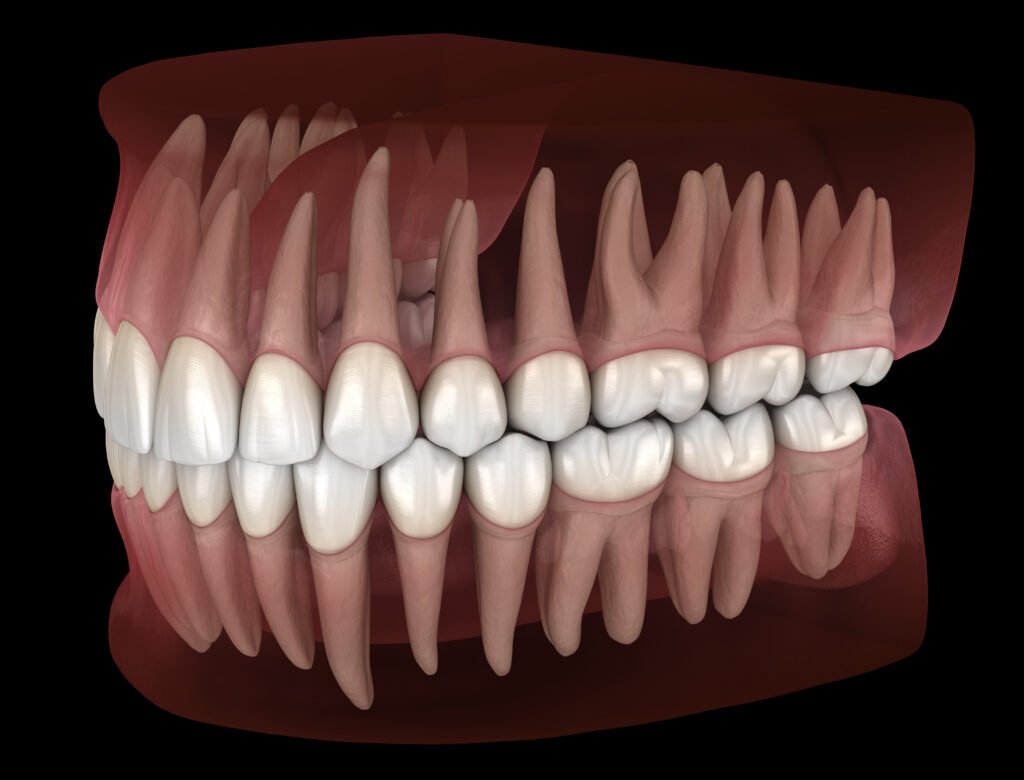
Here are nine incredible facts about how teeth form:
Early Stages of Development
Fact 1: The Process Begins in the Womb
The process of how teeth form, also known as odontogenesis, begins in the fetus as early as six weeks into a pregnancy. At this time, a structure we call the dental lamina forms, which is a thickening in the tissue that will eventually become the upper and lower jaws. This structure, in turn, gives rise to the initial buds of all 20 primary (baby) teeth.
Fact 2: Two Sets of Teeth Are Developing at the Same Time
Amazingly, while primary teeth are still in their early stages of formation, the buds for some of the permanent teeth begin to develop as early as 10 to 14 weeks in the womb. This means that a newborn has a full set of primary teeth and a large number of their permanent teeth already forming beneath the gums.
Building the Tooth’s Structure
Fact 3: The Hardest Substance in the Human Body
Four main parts make up your teeth, enamel, dentin, pulp, and the root. The outer layer, enamel, is the hardest substance in the human body, even harder than bone! Furthermore, this incredibly strong material acts as a protective shield for the more sensitive inner parts of the teeth.
Fact 4: Teamwork Between Different Cell Types
Tooth development is a complex, multi-stage process involving specialized cells. The incredible precision of how teeth form requires a team of different cell types. For example, ameloblasts, which we derive from the ectoderm, create the enamel. Meanwhile, odontoblasts, which come from neural crest cells, produce dentin, the main bulk of the teeth that lies just beneath the enamel. These cells work together in a carefully coordinated dance to build each tooth layer by layer.
The Stages of Formation
Fact 5: From a Bud to a Bell
Tooth formation falls into several distinct stages:
- Bud stage, The initial round tooth bud forms.
- Cap stage, The bud grows, forming a cap-like shape with a concentration of cells that will become the dental pulp.
- Bell stage, The “cap” becomes more bell-shaped, and the cells begin to differentiate into their specialized roles, laying the groundwork for the tooth’s final shape and structure.
Fact 6: The Root Forms After the Crown
The visible part of the tooth, the crown, is completed first. A key part of understanding how teeth form is knowing that after the crown is fully formed, the roots begin to develop, anchoring the teeth into the jawbone. A temporary structure, called Hertwig’s epithelial root sheath, guides this process. Once the root has a solid foundation, the tooth is ready to begin its journey to the surface.
Eruption and Beyond
Fact 7: Teeth Erupt in a Specific Order
While the timing can vary from person to person, teeth generally erupt in a predictable sequence. The first tooth to break through the gums is typically the lower central incisor (bottom middle front tooth) around six months of age. Following this, the last primary teeth, the second molars, usually appear around a child’s second birthday. The first permanent teeth to erupt are typically the lower incisors and first molars around age six.
Fact 8: The Tooth Is an Iceberg
Only about one-third of your tooth is visible above the gum line. The remaining two-thirds, including the root and the pulp, lie hidden beneath your gums, embedded in the jawbone. This is why proper gum care is just as important as brushing the visible parts of your teeth, as it helps support and protect the entire tooth structure.
Fact 9: Natal Teeth Are a Rare Phenomenon
While most babies are born without teeth, a small number of infants (about 1 in 2,000) are born with one or more teeth already erupted. We call these natal teeth. They often develop poorly and may require removal to prevent issues with breastfeeding or the risk of being inhaled.
These fascinating facts highlight the amazing complexity of dental development. Taking good care of your teeth through proper brushing, flossing, and regular dental check-ups is essential for maintaining a healthy smile for life. Trust the experts at Dental Care of Brentwood for all your dental needs. We provide a full suite of services for the whole family right here in Brentwood, California.
Eruption Timelines
The following charts provide a general timeline for when primary (baby) and permanent teeth typically emerge.
| Primary Teeth | Eruption (Months) | Shedding (Years) |
| Upper Central Incisors | 8–12 | 6–7 |
| Upper Lateral Incisors | 9–13 | 7–8 |
| Upper First Molars | 13–19 | 9–11 |
| Upper Canines | 16–22 | 10–12 |
| Upper Second Molars | 25–33 | 10–12 |
| Lower Central Incisors | 6–10 | 6–7 |
| Lower Lateral Incisors | 10–16 | 7–8 |
| Lower First Molars | 14–18 | 9–11 |
| Lower Canines | 17–23 | 9–12 |
| Lower Second Molars | 23–31 | 10–12 |
| Permanent Teeth | Eruption (Years) |
| First Molars | 6–7 |
| Central Incisors | 6–8 |
| Lateral Incisors | 7–8 |
| First Premolars | 9–11 |
| Canines | 9–12 |
| Second Premolars | 10–12 |
| Second Molars | 11–13 |
| Third Molars (Wisdom Teeth) | 17–21 |
Q&A on How Teeth Form
The first sign of a tooth forming is the development of a structure called the dental lamina, which is a band of tissue in the fetal jaw.
Enamel is the extremely hard outer layer of the teeth that protects it, while dentin is a more bone-like, sensitive material that makes up the bulk of the teeth under the enamel.
Primary teeth fall out because the developing permanent teeth beneath them begin to push up and dissolve the roots of the baby teeth, causing them to loosen and eventually fall out.
A tooth is like an iceberg because the majority of it, about two-thirds, is hidden beneath the gum line, embedded in the jawbone.
The pulp is the soft, innermost part of the tooth that contains blood vessels, nerves, and connective tissue, providing nourishment and sensation to the teeth.
Yes, the roots of the teeth continue to grow and develop for some time after the crown has erupted and is visible in the mouth.
Yes, it is rare but possible. These are called natal teeth and are present at birth.
Proper nutrition, particularly adequate intake of calcium, phosphorus, and vitamins A, C, and D, is crucial during pregnancy and childhood to ensure teeth develop correctly and are strong.
If a tooth bud does not form, the corresponding permanent tooth will be congenitally missing, a condition known as anodontia or hypodontia, depending on the number of missing teeth.
The dental lamina is a vital structure because it acts as the foundation from which all primary and permanent teeth will develop.
The Foundation of a Lifelong Smile
Understanding the incredible process of how teeth form is the first step toward appreciating their importance. From the earliest stages of fetal development, your teeth are built with remarkable precision to last a lifetime. Taking care of these vital structures through daily oral hygiene and professional dental care is crucial. Whether you’re due for a routine check-up or have questions about your family’s oral health, our team is here to help.
To learn more about the services we offer, visit our services page. You can also meet our dedicated team of professionals by visiting our doctors page. For your convenience, you can schedule an appointment online today to ensure your teeth get the care they deserve.
