 Skip to content
Gum health is one of the most essential parts of your overall well-being, yet it is often the area that patients understand the least. As a periodontist serving the Los Angeles and Beverly Hills communities, I see every day how early education, consistent care, and personalized treatment can protect your gums for life. In this guide, I want to walk you through the same principles I share with my own patients. My goal is to provide you with clear steps to follow and real data that demonstrate the importance of gum care.
Healthy gums do more than hold your teeth in place. They support your immune system, protect your jawbone, influence your digestion, and even affect the health of your heart. When you understand how your gums function, you can make more informed choices that help keep your smile strong and your body healthier.
Why Gum Health Matters More Than Most People Realize
Many people think brushing their teeth is enough. But gum disease is one of the most common chronic conditions in the United States. According to the CDC, 47 percent of adults over age 30 show signs of periodontal disease. That number rises to 70 percent in adults over age 65. These numbers illustrate how easily gum problems can develop without even noticing the early symptoms.
Here is a simple visual chart showing how gum disease becomes more common with age:
Prevalence of Periodontal Disease by Age Group
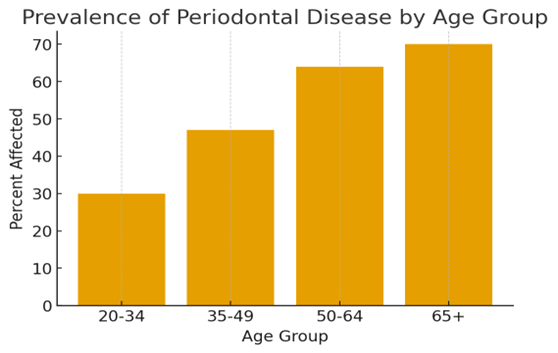
This chart makes one thing clear: the older you get, the more important it becomes to take gum care seriously.
Scientific Fact: Your Gums Are Part of Your Immune System
Your gums are living tissue made of lymphatic cells, connective fibers, and blood vessels. They work as a barrier that traps harmful bacteria and signals your body to fight infection. When your gums become inflamed, this protective system weakens, and harmful bacteria can enter your bloodstream. This is why research has linked gum inflammation to systemic conditions such as heart disease and diabetes.
Source: Mayo Clinic – Oral Health and Overall Health
(https://www.mayoclinic.org/healthy-lifestyle/adult-health/in-depth/dental/art-20047475)
Understanding this connection helps you see gum care as part of caring for your entire body, not just your smile.
The Early Signs of Gum Problems
Patients often tell me they waited to come in because they did not feel any pain. Gum disease is tricky because most early symptoms are painless. Here are warning signs you should not ignore:
• Bleeding when brushing or flossing
• Persistent bad breath
• Red or swollen gums
• Gums that feel tender
• Teeth that feel slightly loose
• Receding gumline
If you feel even one of these symptoms, I strongly recommend a periodontal evaluation. Catching inflammation early helps prevent bone loss and preserves your natural teeth.
What Causes Gum Disease?
Gum disease does not happen overnight. It usually develops from a combination of factors:
1. Poor brushing and flossing habits
Plaque builds up, hardens into tartar, and irritates the gums.
2. Genetics
Some people are biologically more sensitive to inflammation.
3. Smoking
Research shows smokers have twice the risk of developing gum disease.
4. Stress
Stress weakens your immune system and slows your gums’ ability to heal.
5. Hormonal changes
Pregnancy, puberty, and menopause can all make your gums more reactive.
6. Medical conditions
Diabetes, heart disease, and autoimmune conditions raise the risk.
Knowing your risk is the first step toward protecting your gums.
How I Help My Patients Build Lifelong Gum Health
As your Los Angeles periodontist, I focus on treatments and habits that produce long-term results. Here are the core steps I recommend to every patient who wants to maintain strong, healthy gums.
1. Master Proper Brushing Technique
Brushing is not about pressure. It is about angle and consistency. I teach my patients the “45-degree rule.” Hold your toothbrush at a 45-degree angle against your gumline and use small circular motions. This technique removes plaque where it collects most — right at the gum edge.
Brush for two minutes twice a day. Use a soft-bristle toothbrush and fluoride toothpaste. Brushing harder does not clean better. It actually wears down your gums.
2. Floss Every Day to Prevent Hidden Damage
Some patients are surprised when I explain that brushing cleans only about 60 percent of tooth surfaces. Flossing reaches the other 40 percent. That is why flossing daily is one of the most effective steps you can take to prevent gum disease.
If traditional floss is difficult, water flossers and interdental brushes are excellent alternatives.
3. Schedule Professional Cleanings Every Six Months
Cleanings remove tartar that you cannot eliminate at home. Even with perfect brushing, tartar forms when plaque mixes with minerals in your saliva.
Skipping cleanings allows bacteria to settle deeper under your gums. If you already have pockets forming, I recommend a deep cleaning (scaling and root planing) to remove bacteria below the gumline.
4. Keep Your Whole Body Healthy
Your gum health reflects your overall health. When your blood sugar levels are high, your gums become more vulnerable to inflammation. When your immune system struggles, your mouth becomes a target for bacteria.
I always encourage my patients to manage their general health because it directly protects their smile.
For additional reading, the American Dental Association offers patient-friendly educational resources:
https://www.ada.org/resources/ada-library/oral-health-topics/gum-disease
5. Consider Advanced Periodontal Treatments When Needed
When gum disease becomes advanced, modern treatments can stop damage and rebuild lost tissue. As a periodontist, I offer:
• Laser-assisted gum therapy
• Regenerative bone grafting
• Cosmetic gum contouring
• Dental implants
• Gum recession treatment
• Bite adjustment and occlusal correction
My goal is always to preserve natural teeth whenever possible. But when replacement is needed, dental implants remain the most stable and natural-feeling option.
Two Data Points You Should Know
1. Nearly 50 percent of adults over 30 have gum disease (CDC).
This means gum problems are more common than diabetes, heart disease, and most chronic conditions.
2. People with severe gum disease are up to 2.3 times more likely to experience cardiovascular complications.
This number highlights why dentists and physicians are now collaborating more closely than ever before.
Simple Daily Routine for Healthy Gums at Any Age
Here is the routine I recommend to almost all my patients:
Morning
- Brush for two minutes
- Floss
- Use an antibacterial mouth rinse
Afternoon
Drink water after meals to wash away acids and bacteria.
Evening
- Brush again
- Floss if you skipped the morning
- Use a fluoride rinse if recommended
Consistency is more important than perfection.
When to See a Periodontist
You should schedule a visit if:
• Your gums bleed regularly
• You have persistent bad breath
• Your teeth feel sensitive near the gumline
• You notice recession
• Your dentist recommended a specialist
• You are considering dental implants
The sooner you come in, the easier it is to restore your gums to full health.
Final Thoughts from Your Los Angeles Periodontist
Healthy gums are not a mystery. They are the result of simple habits, regular cleanings, and professional support when needed. If you follow the steps in this guide, you can protect your teeth and your health for a lifetime.
If you would like a personalized gum health plan or need a periodontal evaluation, I am here to help. You can visit my homepage at:
https://dentalcareofbrentwood.com
Together, we can keep your smile strong, attractive, and healthy for years to come.
